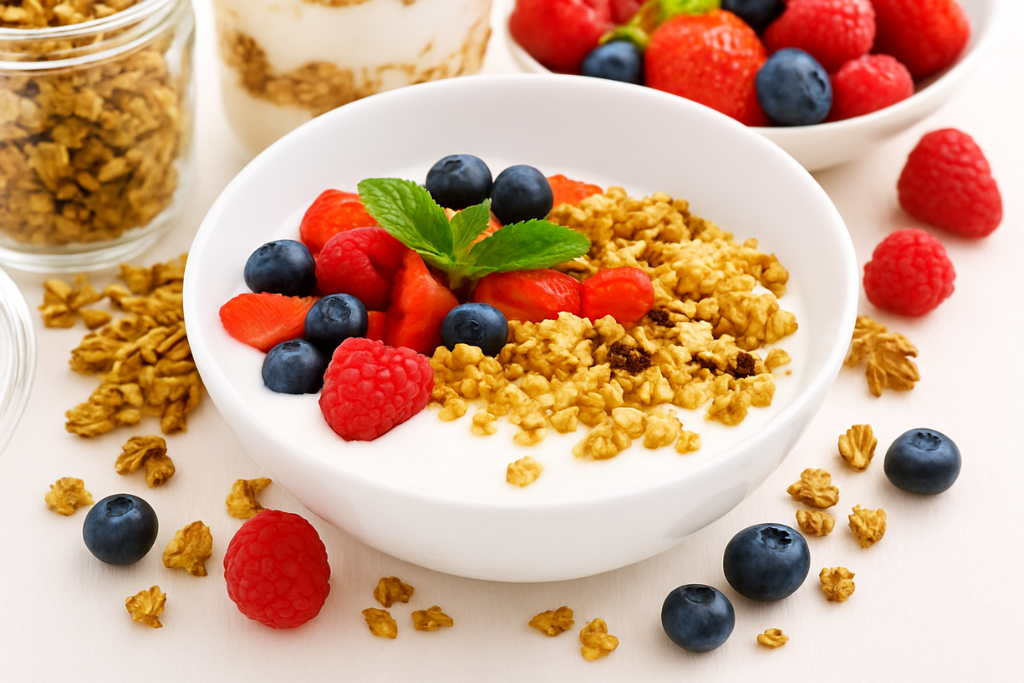
In the dynamic landscape of contemporary nutrition, granola emerges as a champion of wholesome goodness, boasting versatility and a myriad of benefits. This humble mix of oats, nuts, seeds, and dried fruits unlocks a treasure chest of nutrients.
It delivers sustained energy through complex carbs, fosters digestive harmony with fiber content, and provides a nutrient-power punch with protein content, iron, and healthy fats.
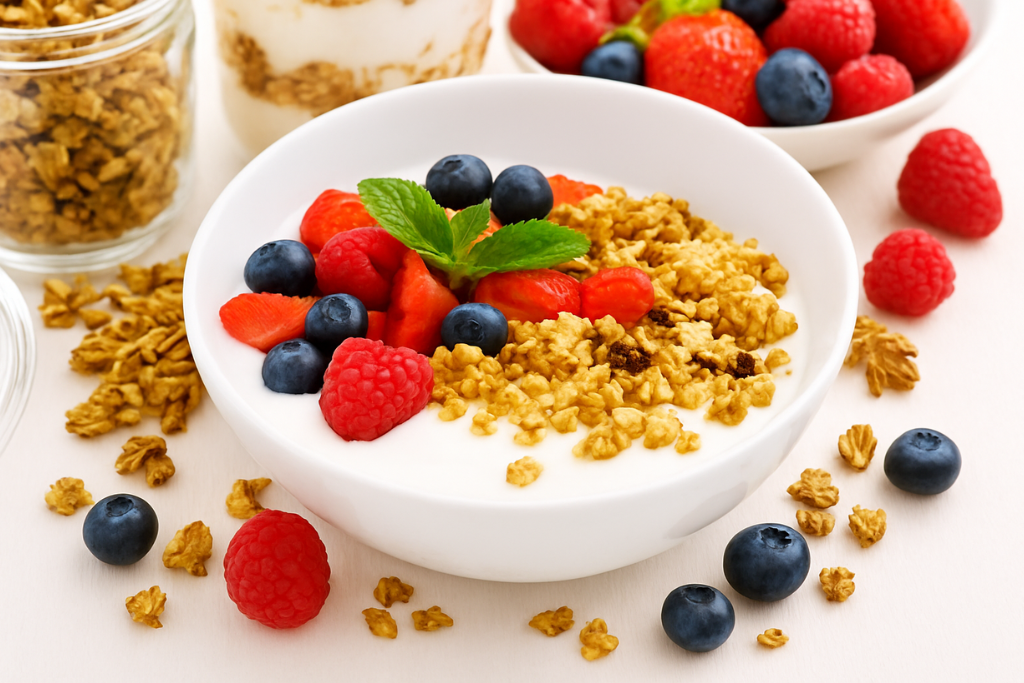
What is granola made of?
Granola is a delightful blend of rolled oats, nuts, seeds, and often dried fruits, bound together with honey or another sweetener. This nutrient-dense mix is baked to golden perfection, resulting in a crunchy and satisfying treat.
What sets granola apart is its adaptability—whether paired with yogurt or milk or enjoyed alone, this versatile concoction offers a delightful combination of flavors and textures.
How to eat granola
Add granola to muffin, cookie, or pancake batter for extra nutty goodness and texture. Top with bananas, chocolate chips, or dried fruit.
Top your apple, peach, or berry crumble with a generous layer of granola for a caramelized, crunchy topping that elevates the dessert.
Soak granola in milk or yogurt overnight for a creamy, no-cook breakfast. Top with berries, chopped nuts, or a sprinkle of chia seeds. If preferences and dietary needs.
Granola benefits for weight loss
While granola isn’t a magic bullet for weight loss, it can be a helpful addition to a healthy diet if you’re watching your weight. Here’s why:
Fiber Power: Granola is typically packed with high in fiber, which keeps you fuller for longer, potentially leading to reduced calorie intake.
Controlled Cravings: The protein and healthy fats in granola can also help curb cravings for sugary snacks.
Portion Control: Opting for homemade granola allows you to control ingredients and portion sizes, avoiding hidden sugars and excessive calories.
Nutrient Boost: Granola often includes nuts, seeds, and dried fruits, providing essential vitamins, minerals, and antioxidants.

6 health benefits of granola
High in Fiber: Granola boasts a good amount of fiber, the magic ingredient that keeps you feeling fuller for longer, potentially leading to reduced calorie intake and aiding in weight management. Say goodbye to mid-morning snack attacks!
Craving Crusher: The protein and healthy fats in granola act as a double whammy against sugar cravings. Protein helps regulate blood sugar, while healthy fats provide sustained energy, preventing those sugar crashes that send you reaching for the cookie jar.
Nutrient Powerhouse: Beyond its filling fiber and protein content, granola often packs a punch of micronutrients. Seeds and nuts add a sprinkle of vitamin E, magnesium, and healthy fats, while dried fruits contribute antioxidants and essential vitamins. Remember, variety is key, so choose granolas with diverse ingredients.
Gut Feeling Good: The fiber in granola plays a friendly role in your digestive health. By promoting healthy gut bacteria and regular bowel movements, you’ll be feeling lighter and more energized. A happy gut makes for a happy you!
Heart Health Hero: Some types of granola incorporate ingredients like oats and flax seeds, rich in beta-glucan, a soluble fiber known to help lower bad cholesterol and support heart health. Choose granolas with whole grains like rolled oats for the most benefit.
Energy Booster: Don’t underestimate the power of a balanced breakfast! Granola’s combination of carbohydrates, protein, and healthy fats provides sustained energy throughout the morning, keeping you focused and productive. Ditch the sugary breakfast cereals and fuel your day with wholesome goodness.

Frequently Asked Questions About Granola
Is granola healthy for weight loss?
Granola can be a part of a healthy weight-loss diet, but it’s not a miracle solution. It’s high in fiber and some nutrients but also calorie-dense. Opt for homemade granola with limited added sugars and pair it with low-calorie options like yogurt and fruit.
Is granola gluten-free?
Not all granola is gluten-free. Oats are naturally gluten-free, but some granolas may contain wheat, barley, or rye. Always check the label for gluten-free certification if needed.
How much granola is too much?
Portion control is critical! A typical serving size is around 1/4 cup but adjust based on your calorie goals and the rest of your meal.
What are some healthy ways to eat granola?
Enjoy granola with yogurt and fruit for a balanced breakfast or snack. Top it on smoothies or oatmeal for added texture and nutrients. You can even use it in trail mix or homemade granola bars.
Can I make granola at home?
Absolutely! Homemade granola allows you to control the ingredients and sweetness level. Look for whole grains, nuts, seeds, and minimal added sugars recipes.
What are some excellent alternatives to granola?
Try rolled oats with fruit and nuts, chia pudding, or Greek yogurt with berries if you want something different.
Does granola expire?
Store-bought granola typically has a shelf life of several months. Homemade granola lasts for about two weeks in an airtight container.
Is granola good for people with diabetes?
Choose low-sugar granola with whole grains and limited dried fruits. Speak with your doctor or a registered dietitian for personalized advice.
Can I eat granola if I have allergies?
Be mindful of potential allergens in granola, such as nuts, seeds, dairy, or soy. Check the label carefully and choose safe varieties for your specific allergies.